タグ アプレンダリングス

Cockney Rhyming Slang- London’s Famous Secret Language

Cockney Rhyming Slang- London’s Famous Secret Language

Can you Adam and Eve it? Cockney Rhyming slang is without doubt an example of beautiful, creative and hilarious expressions of the English language. Both poetic and utterly strange, Cockney sees a combination of odd phrases used to replace simple every day words. Used since the mid-19th century by hard working class in the East End of London – the Cockneys, after which it is named — it is a treasure to behold. WHAT IS IT? Cockney Rhyming is a form of slang, almost like a code, that is commonly spoken in one area of East London. It involves saying a word, that means another completely dofferent thing just because […]

Ways to say you are studying or working overnight

泊まり込みで勉強または仕事をしていると言う方法

今や世界の多くの都市には、私たちのクレイジーなスケジュールに対応する24時間営業のスポットがある。洗濯をしたり、深夜に散髪やピザを買いに行ったり、スターバックスでコーヒーを飲んだり、ジムに行ったり。夜更かしをする人、今夜は泊まりがけで仕事をする人、そんなあなたのためにいくつかの表現を紹介しよう:墓場シフトで働いています。夜中まで働いている。夜中まで働いている。徹夜しなければならない。

Phrasal verbs with multiple meanings

Phrasal verbs with multiple meanings

Phrasal verbs can be confusing because often there’s more than one meaning. Examples: GIVE AWAY 1. Reveal a secret. It was supposed to be a surprise party but I gave it away by leaving the guest list on the kitchen table. 2. Give something for free. Justina gave away her old furniture to her sister. BRING UP 1. Raise a child. Serhii was born in Belarus but brought up in Russia. 2. Start a topic of conversation. Alicia brought up the subject of marriage again but Giang didn’t want to talk about it. PHRASAL VERBS WITH MULTIPLE MEANINGS QUIZ ANSWER: Eugene didn’t need her old clothes any longer, so she […]

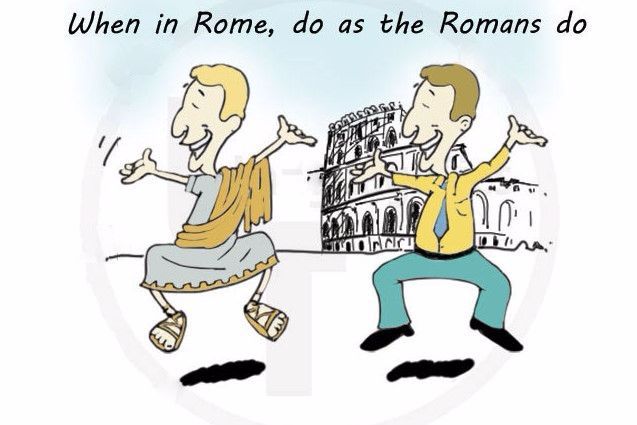
English proverbs in songs – ”When in Rome”

歌の中の英語のことわざ - "When in Rome"

ローマに行ったことがありますか?この表現を聞いたことがありますか?今日は、この表現についての全てを学びましょう。意味は基本的に、相手に適切な振る舞いを勧めたいときにこの表現を使います。基本的には、相手に適切な振る舞いを勧めたいときにこの表現を使います。)例「職場ではみんなカジュアルな服装をしている...私も以前はフォーマルな服装をしていたが、ローマでは郷に入っては郷に従え」:このことわざの由来は?この表現は、西暦390年の聖アウグスティヌスの手紙にある。西暦390年の聖アウグスティヌスの手紙にある。

The whole guide to idioms of love

恋愛慣用句まるわかりガイド

恋の予感!誰かを愛していると表現するには様々な方法がある:片思いしているとか、好きな人がいるとか、あるいは熱愛中であるとか!以下の表現は、恋のさまざまな段階を表しています:恋に落ちるイディオム catch someone's eye = 誰かの目に留まる:"It was the color of his jacket that caught my eye ." to fancy someone (British English) = 相手に魅力を感じること:"学生時代、映画スターに片思いしていた。" to have a [...].

10 ways to say you’re very tired

とても疲れていると言う10の方法

今週は全力で働いている。とても疲れたと感じた時のフレーズを紹介します。同じ意味の10種類の渡し方です!お友達にも教えてあげてくださいね。1) I'm exhausted 2) I'm dead tired 3) I'm knackered 4) I'm worn out 5) I'm spent 6) I'm on my last legs 7) I'm running on empty 8) I'm pooped 9) I can hardly keep my eyes open 10) I'm dead beat

The Passive Voice In the News

The Passive Voice In the News

It is easy to understand the news once you already know the Passive Voice structure, as it always appears in the news headlines, articles, etc. From Wikipiedia, the free encyclopedia “The inauguration of Donald Trump as the 45th President of the United States will mark the commencement of the four-year term of Donald Trump as President. A public ceremony will be held on Friday, January 20, 2017, on the West Front of the United States Capitol Building in Washington, D.C. The inauguration theme is “Uniquely American”, a phrase that highlights the inaugural ceremony as “a uniquely American expression of our Constitutional system.” The theme also stresses the peaceful transition of […]

Tricky uncountable nouns

Tricky uncountable nouns

Have you ever wondered whether you can count a particular noun or not? Count or not to count… that is a question! Nouns like news, information, advice, milk, furniture, luggage or hair are reallly tricky, so be careful when you make their plural forms! Countable nouns These are nouns you can count! They are for things we see as individual items and not part of a greater whole. They can be used with indefinite articles ( a, an=one) and have a plural form. A table– 2 tables, a chair – 4 chairs, a person -12 people, an apple- 10 apples Uncountable nouns These are nouns for things we don’t see […]

Let’s face it: English is a crazy language

Let’s face it: English is a crazy language

There is no EGG in EGGPLANT nor HAM in HAMBURGER, neither APPLE nor PINE in PINEAPPLE. ENGLISH MUFFINS weren’t invented in ENGLAND. QUICKSAND can work SLOWLY, BOXING RINGS are SQUARE, and a GUINEAPIG is neither from GUINEA nor it is a PIG. And why is it that WRITERS WTITE, but FINGERS don’t fing, GROCERS don’t GROCE and HAMMERS don’t HAM? Doesn’t it seem crazy that you can make AMENDS but not one AMEND? If TEACHERS TAUGHT, why isn’t it that in the past PREACHERS PRAUGHT? If a VEGETARIAN eat VEGETABLES, what does a HUMANITARIAN eat? In what other language do people RECITE at a PLAY and PLAYat a RECITAL? We […]

20 Most Tricky English Words

最もトリッキーな英単語20

多くの場合、正しく聞こえる言葉は実は間違っている。以下に挙げるような単語は、ルールを覚えておけば、いざ使おうとしたときに間違いに気づくことができ、正しいことを書いた、あるいは言ったと確信することができる。1.Accept vs. Except この2つの単語は似ているようで全く違う意味を持っています。Acceptは何かを熱心に受け取ることを意味する:「彼女は贈り物を快く受け取った」。Except は除外を意味します:「来週の会議以外は出席できます。2.Affect vs. Effect どちらも名詞としても [...] としても使える。